

Why Excel, SharePoint, and Email Are Not Enough to Keep Your Processes Under Control?
Many private companies today can rightly say that they are no longer at the very beginning of digitalization. Documents are no longer kept only in binders, teams use Excel, SharePoint, Google Workspace, internal folders, emails, and various forms, and procedures exist at least in some form. At first glance, it seems that the company is organized and that things are functioning well enough.
The problem is that “well enough” usually means the work gets done as long as the right people are there, as long as everyone knows their part of the process, and as long as there are not too many changes, too much pressure, or too much growth. The moment there are more requests, more teams, more approvals, or more responsibilities, what many companies know all too well begins to happen: it is no longer clear where the case is, who is currently responsible, what is waiting, who approved what, and why something has been sitting still for days.
That is where the difference becomes visible between a company that uses digital tools and a company that truly has control over its process.
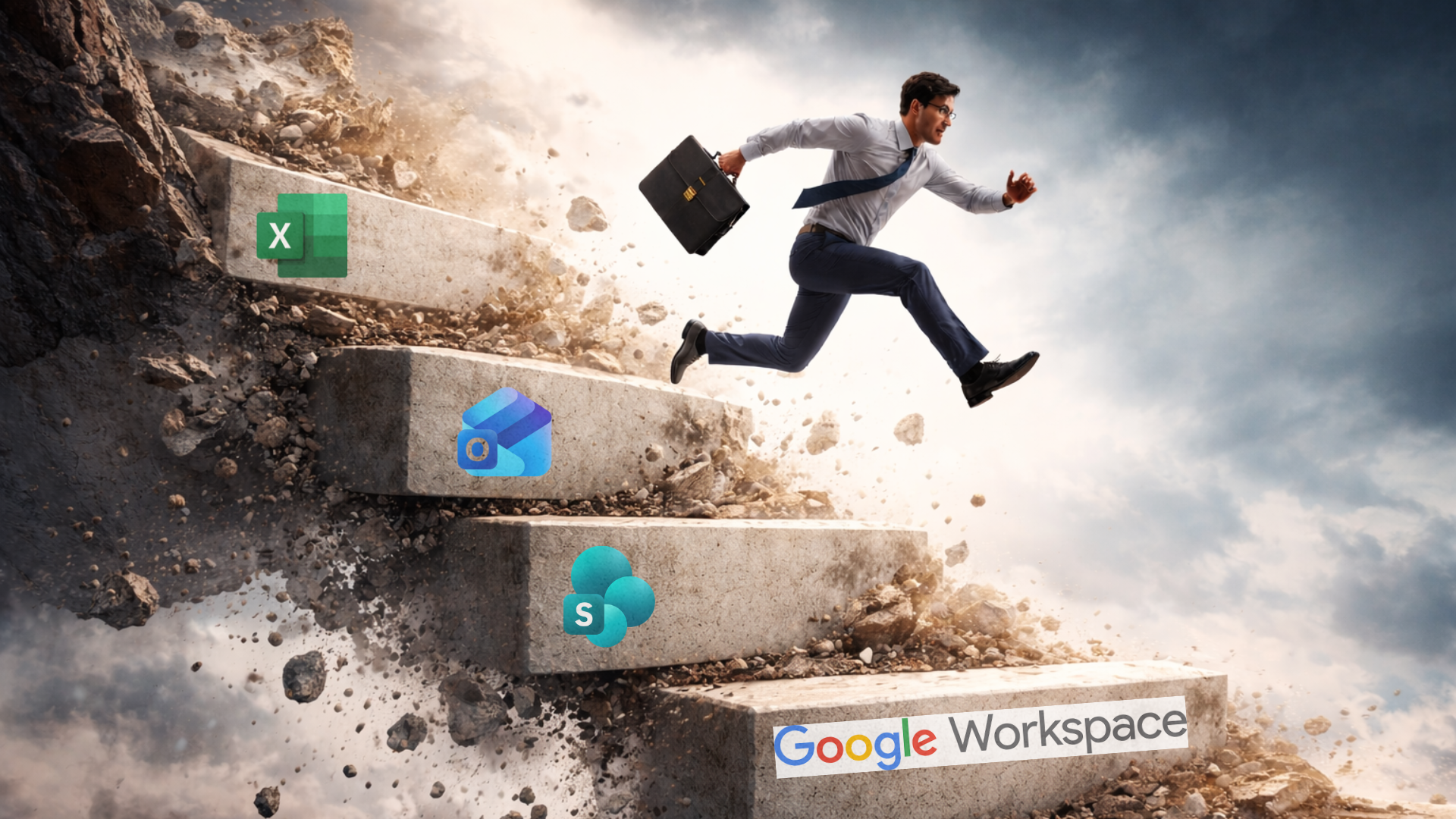
The biggest problem is not the number of tools. The biggest problem is control and traceability.
At this stage, the main issue is not necessarily speed. It is not even the number of tools. The main issue is control and traceability. In other words, the company does not have a clear, reliable, and always accessible answer to basic questions: where is the document right now, who reviewed it last, who is supposed to act next, how long has it been sitting in a certain step, and can it later be proven how a decision was made.
In practice, this looks very familiar. Someone receives a contract for review and sends it to a colleague by email. The colleague makes changes and returns the document. Then approval from another person is required. In the meantime, someone asks for the status, and the checking begins through inboxes, Teams messages, phone calls, or the question, “Is this with you?” The document may exist, but the process around it is not visible. And when the process is not visible, management does not have real control, only the illusion that things are moving.
How does this problem show up in everyday processes?
The same logic applies to incoming invoices, purchase orders, vacation requests, onboarding, internal approvals, and many other processes. The problem rarely arises because people do not want to do their jobs. The problem arises because the organization is trying to manage processes through a combination of good intentions, individual tools, and the personal responsibility of employees. That may work for a while, but it rarely provides a stable overview once the work becomes more complex.
Why does this most often happen in companies that have “already digitalized something”?
Because this stage very easily creates a false sense of security. The company sees that it no longer does everything manually and concludes that the problem is mostly solved. Documents are digital, folders exist, cloud tools are used, procedures are written down, and this creates the impression that the process is under control. In reality, a digital document is not the same as a digital process.
Excel can be useful for record keeping, but it does not manage workflow. SharePoint can be an excellent place to store documents, but on its own it does not solve the issue of responsibility, status, and sequence of steps. Email is convenient for communication, but it is not a process management system. An internal rulebook can explain how something should look, but it does not ensure that it is actually followed consistently and transparently in practice.
When does a company look organized, but actually have no clear overview?
That is why many private companies feel they have made progress, but still depend on manual status tracking. This becomes especially visible when a director asks for a quick overview, when the legal team needs to trace contract versions, when finance is waiting for invoice approval, when an explanation is needed for a delay, or when someone must prove exactly what happened at a certain step. That is when it becomes clear that the information exists, but it is not connected in a way that provides real control.
Why is this a business problem, not just an organizational one?
In private companies, this is not just an organizational problem. It is also a business problem. When the status of a process is unclear, decisions are made more slowly. When it is not clear who is responsible for the next step, delays become more likely. When an overview has to be compiled manually, management spends time navigating operational fog instead of actually managing. When the trace is unclear, every review turns into a small investigative project. And when the company grows, all of this becomes even more expensive.
Many companies only realize at that point that their main challenge is not a lack of work, but a lack of visibility. People are working, documents are circulating, tasks are being completed, but the organization does not have a good enough view of what is really happening inside the process. And without that visibility, every mistake is noticed too late, every delay is hard to locate, and every improvement becomes guesswork.
When process knowledge lives in people, not in the system...
Another problem at this stage is that process knowledge often lives in people, not in the system. There is always someone who “knows how it goes,” someone who knows where it should be sent next, someone who knows what is actually done in practice when the procedure is not entirely clear. That seems harmless as long as those people are there, available, and involved. But the moment someone goes on vacation, changes position, or leaves the company, the process suddenly becomes far less obvious. At that point, the company does not just lose a person, it loses part of its operational stability.
How do you recognize that you have outgrown this stage?
That is why it is important to recognize in time when the company has outgrown this phase. If the status of a process is still most often checked through a message, a call, or an extra question, that is a signal. If several people keep their own records just to “have an overview,” that is a signal. If the document exists, but it is not clear where exactly it is within the process, that is a signal. If management asks for an overview and the team has to compile it manually from several sources, that is a signal. If an auditor, the board, or a client asks for an explanation and the answer has to be pieced together from emails, folders, and people’s memory, that is a signal.
What is actually the next step?
At that point, the next step is not another tool. It is not another spreadsheet. It is not another internal instruction. The next step is a system that connects the document with the process, responsibility, status, and activity trail. A system in which no one has to manually search for where the case is, who is waiting for it, and what has been done so far. A system in which visibility is not a later improvisation, but a built in part of the work itself.
This is where companies move from partial organization to real control. At that point, the process no longer depends on who is currently available, who remembers the order of steps, or who is persistent enough to track everything manually. Management gets clearer insight, teams get less administrative noise, and the company gets a more reliable way of working.
Digitalization is not finished when the document is no longer on paper.
Many private companies in Bosnia and Herzegovina and the region today are no longer at the beginning of digitalization. But they also have not yet reached the point where they truly have control over their processes. That is exactly why this middle phase is so deceptive. It looks like progress, but often it only rearranges the old chaos in digital form.
If your company still has to manually check where a document is, who is currently responsible, and why something is delayed, then the problem is not that you do not have enough tools. The problem is that you do not have a sufficiently clear system. And without a system, control remains dependent on individuals rather than on the organization.
That is where the difference becomes decisive. Because the goal is not simply for a document to be stored somewhere. The goal is for the process to be clear, visible, and manageable. Only then does digitalization begin to deliver what companies actually expect from it: order, visibility, accountability, and less room for delays that end up costing far too much.