

Guide to digitizing case and document processing in the public sector
Faster case processing, greater transparency and data security are key benefits of digitalization, but the transition from manual procedures often seems confusing and overly technical. Where exactly to start and how to avoid mistakes? That's why we've prepared a clear, practical guide that takes you step by step - from the first analysis to full implementation. No complicated terms, just concrete advice and proven methods that work in practice.

What do you get in the guide?
✔ Key challenges and how to solve them – problems with manual records, employee resistance, weak IT support, poor coordination between sectors.
✔ Legal framework and regulatory compliance – clear explanations on how to digitally maintain records, archive books and delivery books in accordance with the laws.
✔ Detailed steps of digitalization – from analysis to implementation – a guide through all 10 key steps: situation analysis, goal setting, resource preparation, solution selection, education and monitoring.
✔ How to choose the right partner – what the implementer must know, how to check references and ensure that the solution meets your real needs.
✔ Case studies of successful institutions – concrete examples from practice that show how others have gone through the process and what benefits they have today.
Download the guide and find out how to reduce paperwork, speed up the flow of cases and improve the work of your institution through digitalization – step by step.
Fill out the form and get the guide for free
Leave your email address and our team of experts will get back to you within 24 hours with a free guide – no obligation. Also, if you have any additional questions or would like advice tailored to your organization, we are at your disposal.
How can we tell if digitalization is truly worth the investment?
Whether you’re securing budget approval in the public sector or a board‑room green light in a private company, the question behind any digital‑transformation proposal is the same: is it worth the investment?
Industry data shows that organizations that successfully automate their processes see returns of 30–200 percent within the first year—but those numbers only materialize when you account for the “hidden” factors that often fly under the radar.
This blog walks you through five steps to calculate true ROI and to fold in qualitative gains such as higher employee satisfaction and reduced reputational risk.
Efficiency, transparency and better governance
The efficiency of public institutions directly affects the quality of services they provide to citizens and the economy.
Digitalization enables faster case processing, greater data security, and better control over processes.
If your institution still uses paper documentation and manual records, everyday work is slower, prone to errors, and places additional burdens on staff.
Administrative procedures in the public sector are managed through cases that consolidate all relevant documents, decisions, and deadlines.
Laws require the maintenance of registers, delivery books, and archive books – which often means double entry and unnecessary administrative burden.
Instead of being focused on paperwork, institutions should focus more time and resources on providing services to citizens.
Digitalization automates compliance with legal regulations, reduces errors, relieves administration, and enables smarter management of public resources.
How do you know that you need digitalization?
If you're stuck with any of the questions below, it's probably time to think about digitizing your organization's business processes.
How much effort is it to find the item?
How much time is spent writing log books?

How do you find related items for a pending item?
How much time do you spend creating work reports?
Do we know as an organization how the work is distributed by subject?
The most common misconceptions about digitalization in the public sector
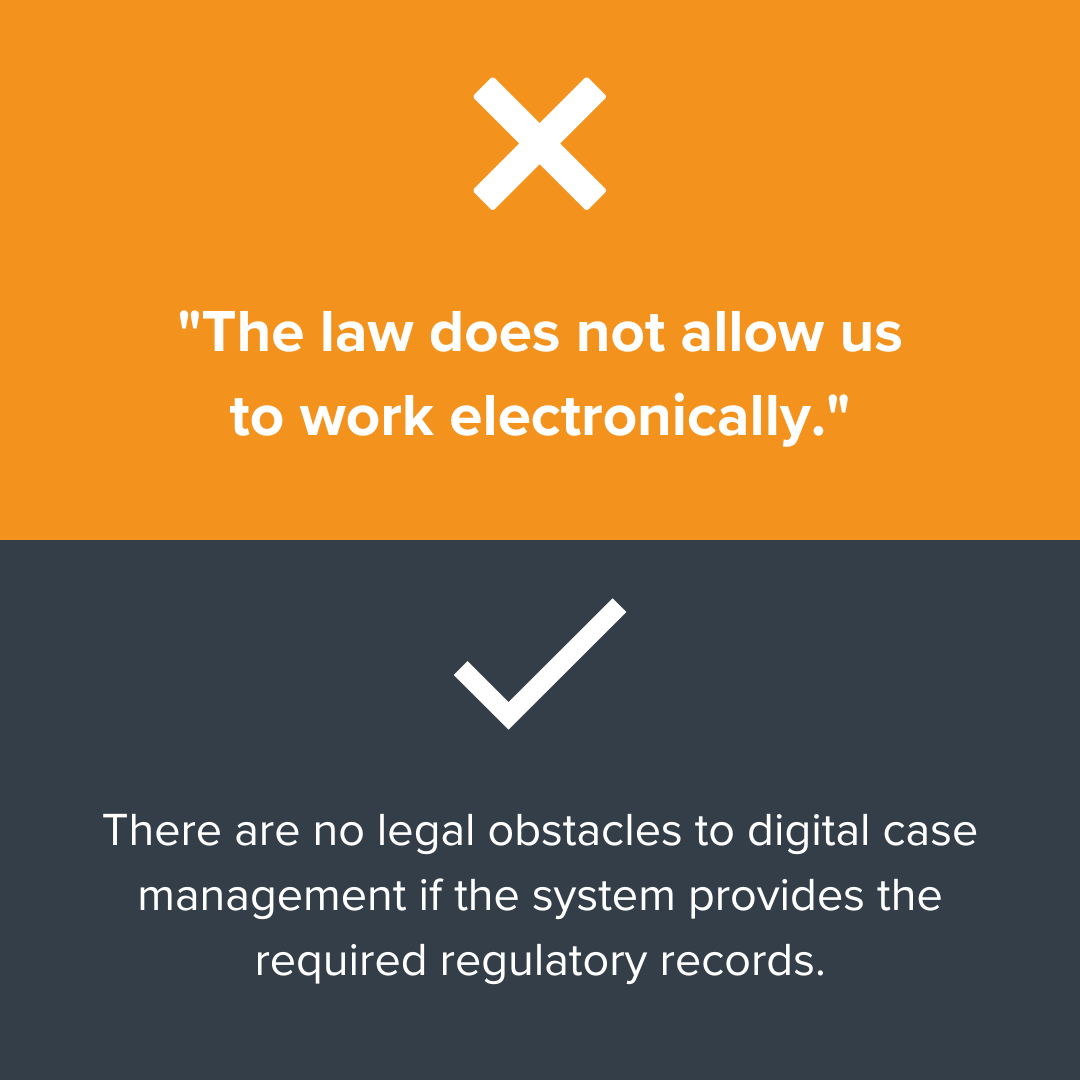


In today's business world, speed is key. Organizations that have already digitized their processes work faster, more efficiently, and with fewer errors – while those that haven't are wasting valuable time and resources.
All this awaits you inside the guide:
10 key steps of digitalization


-
The first step without which there is no meaningful progress. Find out why most institutions make mistakes at the very beginning of digitization.

-
Without clear goals, the system can only complicate the work further. In this guide, we reveal how to avoid digital chaos.

-
Resistance to change is real – and predictable. Learn how to gain allies within your own institution.
-
Digitization is not only about software. Discover how to assess whether you're technically ready – and what to do if you're not.


-
A poorly defined specification leads to solutions that no one uses. We show you how to lay the foundation that works.

-
You choose not only the software, but also the people who need to customize it for you. Find out what the right partner needs to know about your business.
-
The right preparation makes each next step easier. In the guide, we find out what everything needs to be in place before the system starts working.


-
What if something doesn't work? The guide takes you through stress-free testing and shows you how to bring your system up and running gradually – without downtime.

-
The best system is worthless if people don't use it properly. Here's how to make sure everyone knows – and wants – to work digitally.
-
Digitalization is not a “once and done” process. Discover how institutions that successfully digitize never stop improving.